Where Hair Restoration Is Headed: A Conversation with Maxim Founder Mac Fadra
By Mac Fadra, Founder and CEO, Maxim Hair Restoration
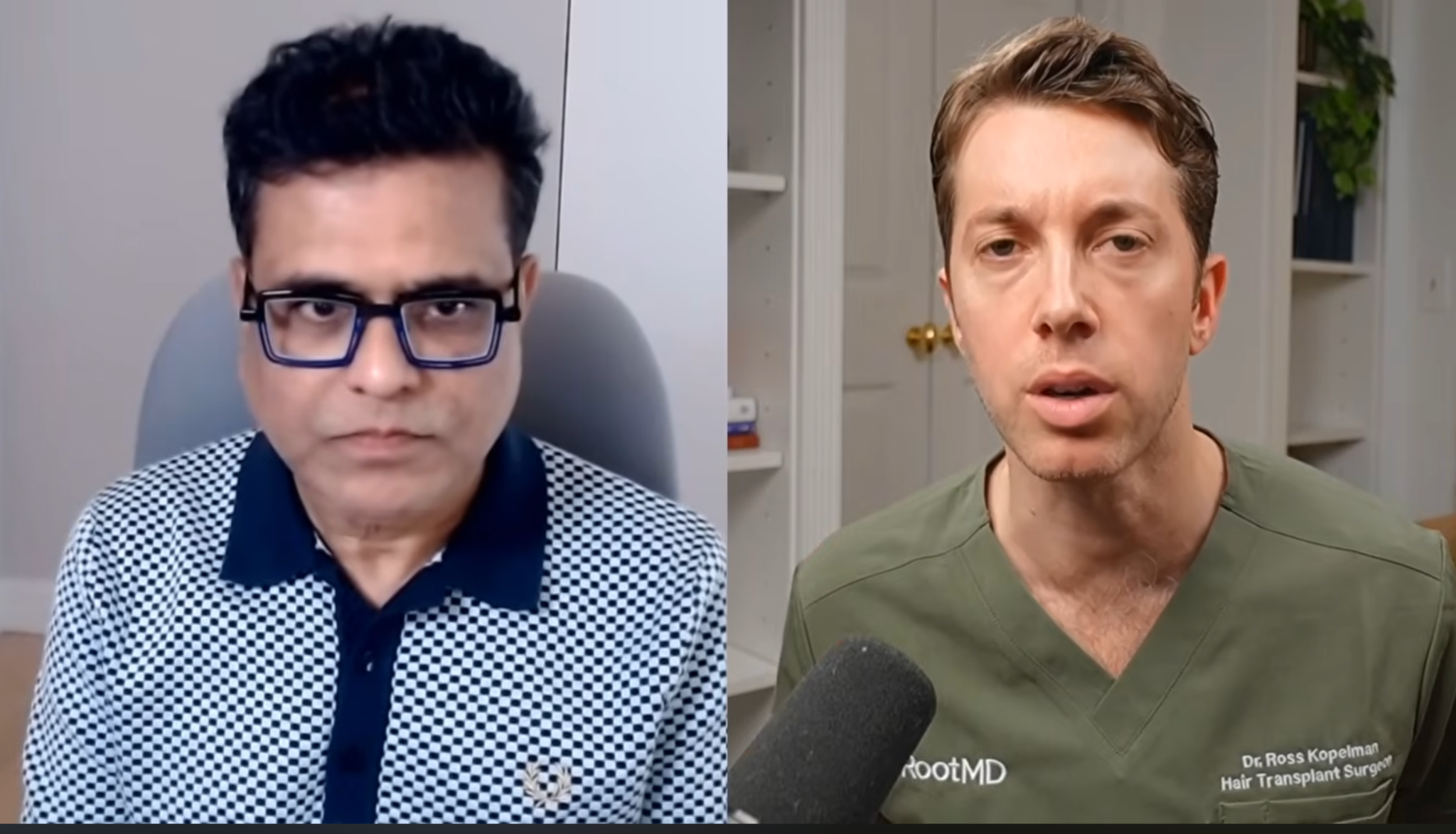
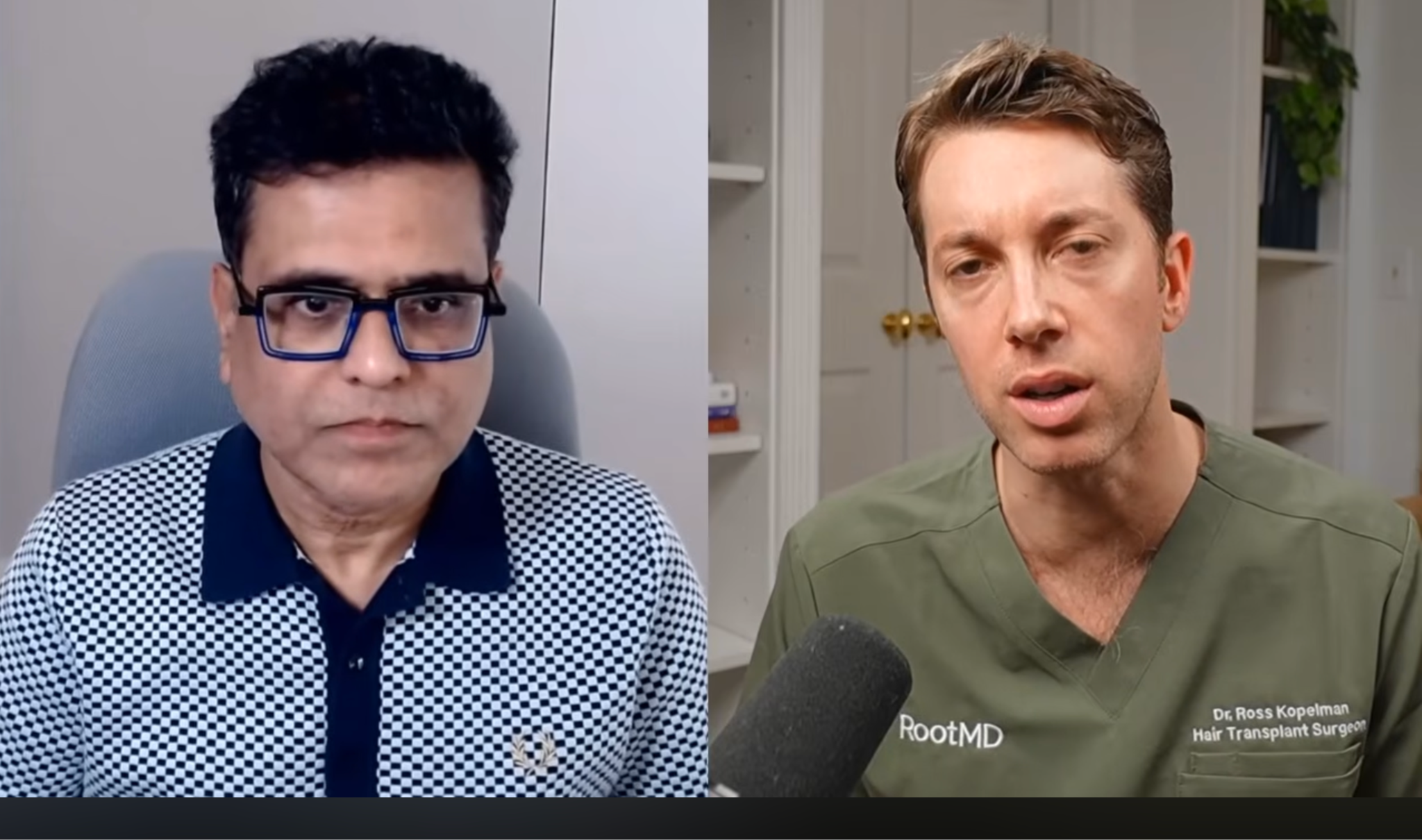
Maxim Hair Restoration founder and CEO Mac Fadra recently joined Dr. Ross Kopelman, hair restoration surgeon and founder of Kopelman Hair Restoration in New York City, on his podcast. Below, Mac answers the questions patients ask most about building Maxim, keeping care consistent across clinics, and where the field is going next.
Watch the episode: Mac Fadra on Dr. Ross Kopelman’s podcast (YouTube)
| Key takeaways |
|---|
| Most patients get the best results from a combination of surgical and non-surgical care. |
| Many patients need more than one transplant session, and ongoing treatment protects existing hair. |
| Medical tourism risks come from too little physician oversight, not from any one country. |
| Each Maxim location’s medical director chooses techniques, backed by shared training, outcome tracking, and chart audits. |
| AI imaging, regenerative research, and hair longevity programs are shaping what comes next. |
In this post
- How Did Mac Fadra Get Into Hair Restoration?
- Why Are Hair Transplants No Longer Taboo?
- How Does Maxim Keep Hair Transplant Quality Consistent Across Locations?
- Is a Hair Transplant in Turkey Safe?
- How Many Hair Transplant Sessions Will You Need?
- What Is the Future of Hair Restoration? 6 Trends to Watch
- Frequently Asked Questions
- Watch the Full Conversation
How Did Mac Fadra Get Into Hair Restoration?
Short answer: I related to it personally, and I saw a field that was ready to grow.
Before Maxim, I spent about ten years in ophthalmology, medical aesthetics, and cosmetic surgery, fields where most patients and buyers were women. Hair restoration was different: at the time, more than 95% of patients were men, and I live with lichen planopilaris, an autoimmune scalp condition. For the first time, I could advise patients who were going through what I was.
“I found an industry that I could relate to.”
Mac Fadra, Founder and CEO, Maxim Hair Restoration
I also saw room to grow. Sessions were small, often around 1,000 grafts, patients needed many procedures, and few providers operated at scale.
Why Are Hair Transplants No Longer Taboo?
Short answer: the results got better. Today’s transplants look natural, so people aren’t afraid to talk about them.
When I started, men researched longer and decided more deliberately than women, and they rarely told their friends. A hair transplant was something people hid.
Several shifts changed that: celebrities and athletes speaking openly about their procedures, telehealth brands normalizing hair loss treatment, and, above all, better results. The old “plugs” looked unnatural; a good transplant today does not.
Partners still matter. The most common thing we hear after a consult is that the patient needs to talk it over with their spouse. Cost is second, which is why we offer payment options including 0% financing.
We’re also seeing more women seek treatment. The International Society of Hair Restoration Surgery (ISHRS) has found that women make up about 1 in 7 surgical patients and roughly a third of non-surgical patients (ISHRS Practice Census). Its latest census found the number of female surgical patients grew 16.5% from 2021 to 2024 (ISHRS 2025 Practice Census). Many women choose non-surgical options such as regenerative injections, topical or oral treatments, or eyebrow transplants.
How Does Maxim Keep Hair Transplant Quality Consistent Across Locations?

Short answer: the local medical directors make the clinical decisions, and we give them the systems to track and share results.
I came to hair restoration with experience scaling a laser hair removal chain and running a group of LASIK centers. Growth depends on systems, infrastructure, a strong management team, and above all a strong clinical team. Every Maxim location pairs its physician with capable PAs, NPs, RNs, and technicians, so care doesn’t rest on one person.
“A hair transplant procedure is like running a Formula 1 team.”
Dr. Ross Kopelman
What we centralize is oversight:
- Weekly continuing education sessions
- A clinical director who trains teams on new tools and techniques
- A director of R&D who evaluates new technology and shares findings
- One shared library of before-and-after photos and one CRM
- Regular chart audits to confirm documentation is complete, plus HIPAA compliance support
Looking ahead, we’re open to acquiring established practices as longtime surgeons near retirement.
Is a Hair Transplant in Turkey Safe?
Short answer: it can be, if a qualified physician is truly in charge. The risk is a lack of oversight, not the country.
I first saw patients traveling to Turkey for transplants about a decade ago. It started with skilled, reputable surgeons. In my view, quality declined after rules loosened to let technicians perform transplants without a doctor, and some clinics now run dozens of cases a day.
The savings can disappear once you add travel and follow-up care at home. I’ve seen patients come back with overharvested donor areas and severe folliculitis that needed costly treatment in the US.
The issue is oversight, not geography. Turkey still has excellent surgeons, and our own clinic in Manila is led by a plastic surgeon with certified nurses. My advice: know exactly who will perform your procedure, and choose a clinic where a physician is truly in charge.
How Many Hair Transplant Sessions Will You Need?
Short answer: most patients benefit from more than one session over time, and a transplant isn’t the end of care.
Many patients arrive expecting one session to restore their hairline, top, and crown. We address that early, because hair loss usually keeps progressing after surgery.
“You still have other hair you need to preserve.”
Mac Fadra
That can mean minoxidil, finasteride, or another treatment plan suited to the patient.
Donor supply is the other limit. A patient may need 6,000 grafts but have only 3,000 available from the scalp. Beard hair can work well as a supplement, while body hair such as chest hair survives at much lower rates. Our goal is to underpromise and overdeliver.
What Is the Future of Hair Restoration? 6 Trends to Watch
Short answer: combination treatments, smarter technology, and a much broader range of patients.
Here’s what I see coming:
- Surgical and non-surgical care together. I don’t think we’ll see one or the other. Combination plans will become the norm.
- Larger sessions. As techniques improve, I expect much bigger single sessions to become possible.
- Regenerative treatments. I expect continued progress in stem cell and exosome research, though these remain areas of active study.
- AI in diagnosis and planning. We already use AI-powered imaging to map scalp condition and hair density and to estimate how many grafts a patient can safely donate.
- A broader patient base. Patients once fell mostly between 30 and 50. Today we treat men from their early 20s into their 70s, along with a growing number of women.
- Consolidation. I estimate the US market is growing about 11% a year; published forecasts vary, with one projecting more than 8.5% annual growth through 2030. With many surgeons nearing retirement, I expect more practices to join larger groups.
We’re also expanding into men’s health and what I call hair longevity: a program that tracks a broad panel of biomarkers, including blood work, to help patients protect the hair they have and plan surgical or non-surgical treatment when needed.
If a hair-growth pill ever arrives, I think it would make transplants more effective, not obsolete, because stronger existing hair and less pressure on donor supply mean better candidates.
Frequently Asked Questions
Can beard hair be used in a hair transplant?
Yes. Beard-to-scalp transplants can supplement scalp donor hair, and beard hair often works well. Body hair such as chest hair is generally less reliable.
Are stem cell and exosome treatments for hair loss proven?
They are areas of active research. Ask your provider what evidence supports any regenerative treatment and how it fits your plan.
Can I finance a hair transplant?
Yes. Maxim offers payment plans, including 0% financing options.
Watch the Full Conversation
This post is based on Mac Fadra’s interview with Dr. Ross Kopelman. You can watch the full episode on YouTube.
Thinking about hair restoration? Book a consultation with a Maxim team near you.
Mac Fadra, MBA, MPH, MSLS, is an experienced health care management professional & entrepreneur with over 25 years of management, marketing, operations, finance, information technology, business development and new ventures. His experience spans the hair restoration, ophthalmic services, refractive surgery, medical aesthetics, cosmetic surgery and men’s health sectors for established health care organizations as well as start-up entities in the U.S. and international markets.
He is currently CEO at Maxim Hair Restoration which operates 15+ centers in the U.S. and overseas. He has navigated the company toward profitability while pursuing related diversification into men’s health, longevity and medical aesthetics.
He has lived, worked and studied in six countries and holds Master’s degrees in Business, Health Policy & Management, and Legal Studies from Columbia & Cornell Universities. Mac is based in NYC.
Dr. Ross Kopelman is a hair transplant surgeon and physician educator whose clinical work focuses on surgical and medical treatment of hair loss in men and women. As Founder and Medical Director of Kopelman Hair Restoration and the Unshaven Hair Clinic, with practices in New York City and Palm Beach, Florida, he performs both FUE and FUT procedures for the scalp, eyebrows, and beard, with an emphasis on long-term planning and natural outcomes.
His broader work centers on expanding access to evidence-based care: he co-founded RootMD, an educational platform and hair growth company, and founded DermOnDemand, a telemedicine service for dermatologic care. A committed patient educator, Dr. Kopelman translates complex hair loss research and treatment options into accessible content across YouTube, Instagram, and TikTok, where his work has drawn more than 100 million views, and he co-hosts the Hair Doctors Podcast, featuring conversations with specialists in hair restoration, dermatology, and aesthetics.