Sun Damaged Hair: How to Repair It and Prevent It
Sun-damaged hair is a very common chief complaint in dermatology and hair restoration clinics, especially after long vacations, outdoor work, and being at the pool or beach for a long time. In general, this complaint is a very frequent hair health concern in summer.
At first, the phrase sounds cosmetic. However, the pathophysiology that drives this condition is unequivocal. Sun damage can alter:
- Proteins.
- Lipids.
- Pigments.
- The hair cuticle.
This is exactly why hair from sun damage can feel rough before the follicles break down. Sun-damaged hair may look dull, tangle more easily, and lose softness even when the follicle is still healthy.
Key Takeaways
- Sun-damaged hair occurs when UV rays weaken the hair shaft. This causes dryness, color fading, brittle texture, and increased hair breakage.
- Protection and repair are still possible by sun exposure prevention, UV protection, and the restoration of moisture with cosmetic products.
What sun-damaged hair does to the hair fiber
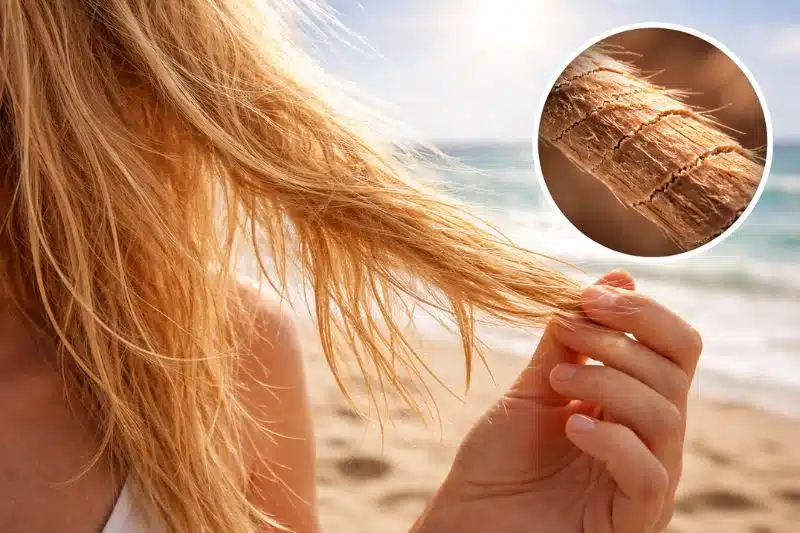
Sun-damaged hair occurs when repeated sun exposure and heat overkill the fiber’s natural defenses. Research on hair photobiology demonstrates that UV rays and visible light can affect the structure and integrity of the shaft. At the same time, studies prove that photoaging damages the structures of proteins, lipids, and pigment. Interestingly, those UV rays do not hit all hair strands equally.
In simple English, the sun’s rays can weaken the outer surface, fade color, and make the fiber less resilient. This is exactly why the hair from sun damage can first show up as roughness, brittle hair, or just a sun-damaged hair look instead of abrupt shedding [1][3][4].
The outer barriers are very important since the hair shaft is coated by a lipid layer that reduces friction and supports shine. Simultaneously, the hair cuticle protects deeper structures. Scientists found that the cuticle and its lipid-rich surface are critical to keep the strands smooth and resilient. Once sun damage disrupts this system, we start dealing with:
- Moisture loss.
- A rougher outer layer.
- Weathered fibers become easier to snag and split.
The following table summarizes how sun damage affects the fiber and exposed skin:
| Area | Effect of sun damage | Common sign |
| Hair cuticle | Roughening of the hair’s outer layer. | Frizz, tangles, and reduced shine. |
| Cortex and protein structure | Weakening and damaged protein loss. | Brittle hair, split ends, and hair breakage. |
| Pigment | Oxidation and color changes. | Dullness, brassiness, and color fading. |
| Lipid layer | Loss of protective surface lipids and natural oils. | Dry hair, rough feel, and hair feeling dry. |
| Exposed skin at the part line | UV damage to the thin areas and the part line. | Tenderness, redness, and flaking. |
Why does sun damage show up differently in different people?
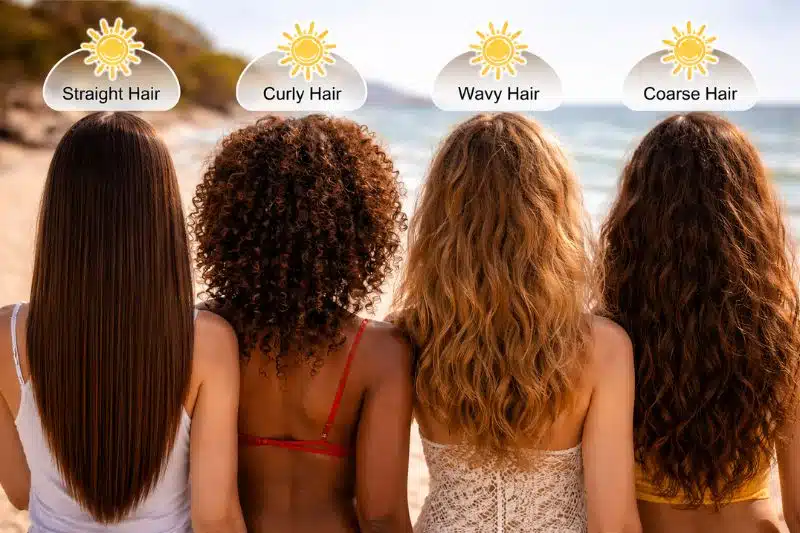
The simple answer is that hair type hugely impacts the consequences of sun damage. For instance, we wouldn’t expect straight hair, coarser hair, curly hair, or chemically treated follicles to respond the same to summer stress. According to the American Academy of Dermatology, bleaching your hair makes it prone to UV damage from the sun and chlorine damage from the pools[4].
Research also suggests that darker shades absorb radiation differently from lighter shades, which is why we see hair color changes more in lighter hair strands. However, this is just one reason sun damage can seem selective across hair strands [6].
It does not mean that darker fibers are immune to sun damage. In fact, it is common to see hair dryness in people with coarser hair because the oil finds it difficult to travel throughout the entire length of the hair follicle. One person might notice that sun-induced hair damage shows up as color fading, whereas another patient mainly sees split ends, frizz control problems, or a rough finish after beach days.
From a clinical perspective, the way the sun affects the fiber depends on hair type, chemical processing, and how much direct sunlight and heat the person sees week after week [2][4][6].
The science behind hair from sun damage
There are numerous mechanisms to explain the damage done by the sun. First, sun exposure can degrade pigment and proteins. Some experimental studies concluded that ultraviolet and visible radiation increased protein loss in all tested fibers. What’s more, UVB rays were more damaging to protein than UVA.
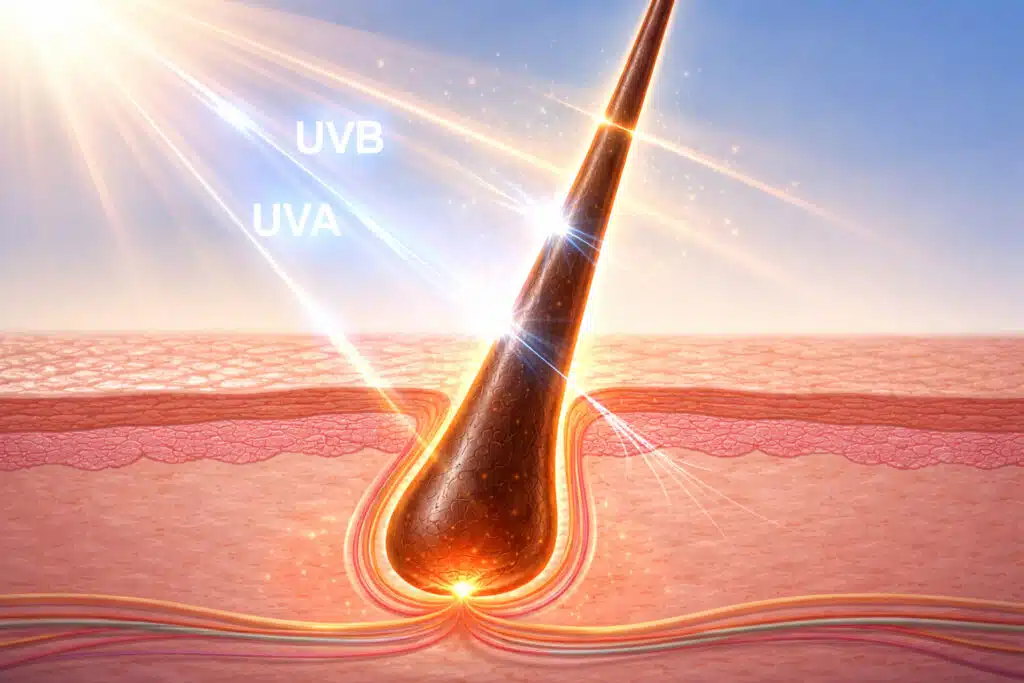
Second, photoaging research describes oxidation of amino acids and fatty acids in and on the cuticle. These two changes explain why sun-induced hair damage can leave the damaged hair brittle, harder to style, and more likely to show split ends [1][3][4].
When patients say “my hair is dry, rough, and flat after summer,” this exact description fits the science. What happens is that the fiber has lost part of the extra layer that helped it glide and resist friction. If heat styling continues on top of that, more damage becomes inevitable. A blow dryer, flat iron, and curling iron may be tolerated by healthy fibers. However, they can damage your hair faster after too much sun exposure has already weakened the surface [3].
How to tell sun-damaged hair from true hair loss
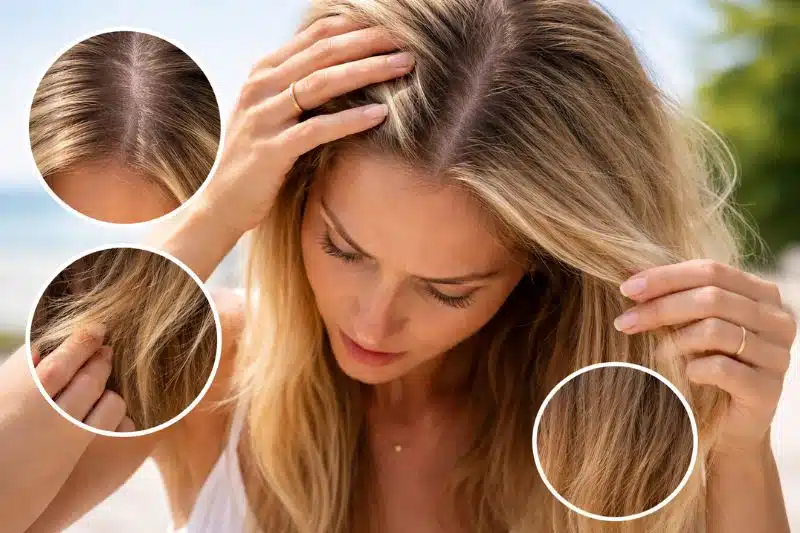
Sun-damaged hair affects fiber quality first. Consequently, the shafts look dull, the ends split, and the texture changes. True loss affects the follicle and the density pattern. So, if you see wider parts, recession, and reduced fullness at the crown, the problem may not be simple weathering. In fact, many people have both issues at once:
- Thinning at the roots.
- Hair from sun damage on the exposed lengths.
If sun damage is the main problem, we need to look at some common clues, which include hair breakage, faded color, and split ends that worsen after sun exposure or chlorinated water.
Finally, if you notice that your hair’s density has decreased, a more comprehensive approach is necessary to replace the lost hair. This could be medical or surgical options, since repair alone will most likely do nothing.
Readers who want to review the medical and surgical options to manage a declining hair density can check out MAXIM’s guide to the best treatments for stimulating hair growth.
How to protect your hair before the problem starts
The smartest way to protect your hair ahead of time is by preventing UV light exposure. For instance, a wide-brimmed hat is still the most dependable way to protect your hair.
In reality, even skin cancer prevention campaigns stress the need for a hat to lower the risk of melanoma and other tumors. You can also apply sunscreen to the hairline, part, and thin spots if you notice that these areas are dry. The same rules apply when the sun’s rays are intense [8].
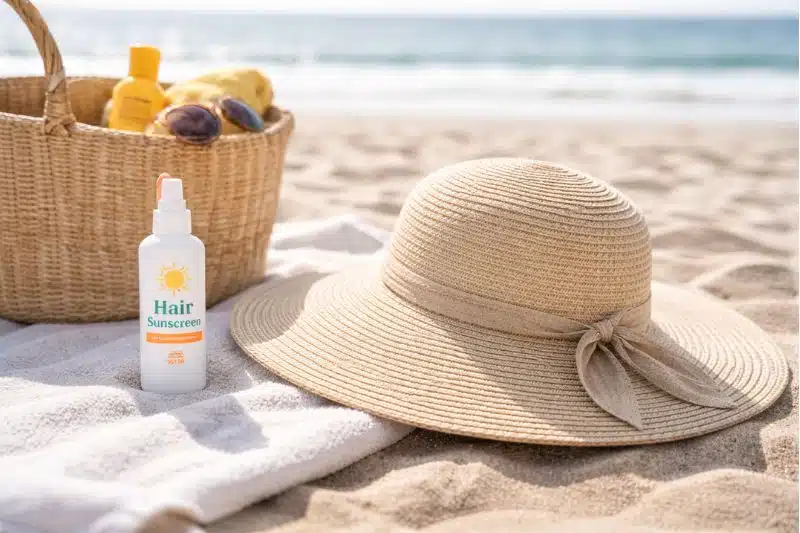
One interesting avenue is hair sunscreen, but we recommend you temper your expectations. Hair sunscreen sprays can provide some UV protection, especially around the part line and hairline. However, a 2023 study found that three tested hair sunscreen products did not demonstrate any real protection. In other words, hair sunscreen can be useful, but it should not replace hats and shade [5][8].
We recommend that you choose formulations that are specially designed for the area you need to cover. For exposed head skin, the Skin Cancer Foundation recommends sunscreen on the part line, hairline, and balding spots. The guidelines also note that mineral options with zinc oxide or titanium dioxide can work well for sensitive skin [8].
The AAD recommends a leave-in conditioner or oil before you go for a swim because it creates a barrier between the fiber and harmful chlorine. This is especially useful when pool day happens to be on a day with strong UV lights. In this case, we also recommend adding a swim cap, rinsing after swimming, and shampooing soon after [6][7].
Best repair routine for sun-damaged hair
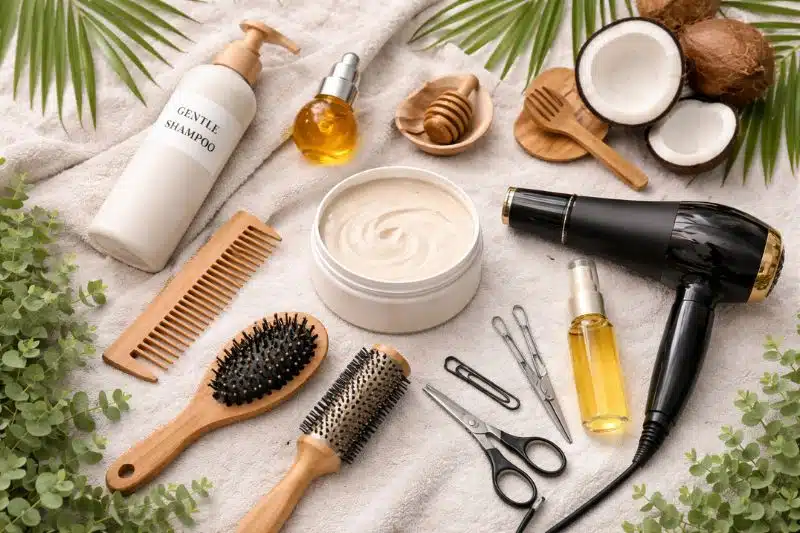
Once sun-damaged hair is already done, your focus should be on repair.
Shampoo type
The first and most important step is to start with a gentle shampoo. Dermatologists advise the application of shampoo to the roots and letting the lather flow through the lengths. You should not rub the full length aggressively. Follow every wash with conditioner because damaged hair loses surface smoothness and needs help with detangling and slip [7].
Hair mask
Another helpful strategy is to do a weekly hair mask. A hair mask cannot rebuild every broken bond inside a weathered shaft, but it can restore moisture, improve feel, and reduce friction. For many patients, a rich mask once or twice a week does more than the latest best line of social media products. This product works best when the formula is specially designed for the person’s hair type and porosity [2].
Heat control
Make sure to limit heat styling when your hair fibers are recovering because high heat on already weakened strands can worsen hair damage and heat damage. Let the lengths air dry part of the way, use lukewarm water, and save cool water for the final rinse if it feels comfortable. None of these steps reverses sun-induced hair damage overnight. However, they lower daily stress and recover moisture over time [7].
A micro trim
When split ends are visible, a small trim can be useful to remove the most weathered segment and prevent the split from tracking upward. In reality, regular trims are one of the fastest ways to improve a sun-damaged hair look, especially after beach days, outdoor heat, and high-heat styling. If your goal is long, glossy, sun-kissed locks, it is better to keep less length than to hold onto badly frayed tips.
If your hair is not improving despite consistent repair, the issue may go beyond surface damage. Book a consultation with Maxim to better understand what’s affecting your hair and explore the most appropriate next steps.
Here’s a practical plan for hair from sun damage:
| Goal | What to do | Why it helps |
| Cut UV load | Wear a wide-brimmed hat. | Protects against UV light. |
| Cover exposed areas | Use scalp sunscreen on the part line and hairline. | Protects the skin where the fiber is thin. |
| Reduce pool injury | Apply leave-in conditioner and use a swim cap. | Adds a barrier before you’re exposed to chlorinated water. |
| Clean gently | Use a gentle shampoo on the roots. | Reduces stripping of weathered lengths. |
| Recondition | Use conditioner and a weekly hair mask. | Restore moisture and reduce roughness. |
| Reduce mechanical stress | Brush gently and use a wide-tooth comb. | Reduces tugging and breakage. |
| Reduce heat stress | Limit heat styling. | Prevents further damage. |
| Improve the ends | Get a micro trim. | Removes the most damaged segment. |
When the scalp needs more attention
Sun-damaged hair may be the more discussed topic, but we also need to remember the scalp. The scalp is skin, so it can burn, flake, and accumulate UV damage. For this reason, we recommend that you pay attention to your scalp health and create a separate plan if you have recession, diffuse thinning, or a sensitivity to a procedure.
In case of persistent irritation, a specialized consultation is most likely needed. A consultation can separate sun damage from patterned loss, inflammatory disease, and traction-related alopecia.
Conclusion
Sun-damaged hair is not just a cosmetic issue; it’s actually a pathological process that can degrade proteins, fatty acids, and pigment. As a result, the surface is left rough, and the ends become weak. Chronic sun damage from UV rays can add up to make this damage irreversible.
The best solution to this problem is not a miracle product. Instead, you need to focus on UV protection, smart pool habits, less heat styling, a weekly hair mask, and a routine that matches your hair type.
Protect your hair early, consistently, and year-round if you spend a lot of time outdoors. By far, this is the most reliable way to keep the fiber hair strong.
If you’re unsure whether you’re dealing with sun damage, early thinning, or both, getting the right diagnosis is key. Book a free consultation with Maxim to better understand the cause of your hair changes and explore the most appropriate treatment options.
Frequently Asked Questions (FAQs)
1. What is sun-damaged hair?
Sun-damaged hair describes hair follicles that are weakened due to chronic exposure to UV light. The latter breaks down proteins, lipids, and pigment within the hair shaft, which results in dryness, rough texture, split ends, and increased hair breakage.
2. How can I protect my hair from sun exposure?
To protect your hair, limit direct sunlight, wear a wide-brimmed hat, and use UV protection products. Another helpful tool is to apply leave-in conditioner before you go for a swim.
3. What is the best way to repair sun-damaged hair?
Repair focuses on the restoration of moisture and the protection of hair follicles from physiological stress. To achieve this goal, use a gentle shampoo, apply conditioner regularly, and include a weekly hair mask.
References
[1] Signori, V. (2004). Review of the current understanding of the effect of ultraviolet and visible radiation on hair structure and options for photoprotection. Journal of Cosmetic Science, 55(1), 95–113.https://library.scconline.org/v055n01/55n01_p0095.pdf
[2] Fernandes, C., et al. (2023). On hair care physicochemistry: From structure and degradation to novel biobased conditioning agents. Molecules, 28(4), 1553.https://www.mdpi.com/1420-3049/28/4/1553
[3] Lee, W. S. (2009). Photoaggravation of hair aging. Annals of Dermatology, 21(3), 243–249.https://doi.org/10.5021/ad.2009.21.3.243
[4] Nogueira, A. C. S., Joekes, I., et al. (2004). Hair color changes and protein damage caused by ultraviolet radiation. Journal of Photochemistry and Photobiology B: Biology, 74(2–3), 109–117.https://doi.org/10.1016/j.jphotobiol.2003.12.005
[5] Stolecka-Warzecha, A., et al. (2023). Assessment of the photoprotection properties of hair cosmetics using the hemispherical directional reflectance method. Health Science Reports, 6(9), e1552.https://doi.org/10.1002/hsr2.1552
[6] American Academy of Dermatology Association. (2021). Must-try summer hair care.https://www.aad.org/public/everyday-care/hair-scalp-care/hair/must-try-summer-hair-care
[7] American Academy of Dermatology Association. (n.d.). How to stop damaging your hair.https://www.aad.org/public/everyday-care/hair-scalp-care/hair/stop-damaging-your-hair
[8] Skin Cancer Foundation. (2020, April 1). Ask the Expert: How can I protect my scalp better?https://www.skincancer.org/blog/ask-the-expert-how-can-i-protect-my-scalp-better/

 English
  Spanish