Beard transplant before and after: See the results
A beard transplant is a permanent solution for patchy or thin facial hair, with full results appearing in 6-12 months. Recovery usually takes about a week, and choosing a qualified surgeon ensures natural, lasting results.
Table of Contents
- What is a beard transplant?
- Beard restoration: Before and after results
- How long does a beard transplant last?
- Beard transplantation costs
- Risks and complications of beard transplants
- How to choose the right beard transplant clinic
- Conclusion
- Frequently Asked Questions
What is a beard transplant?
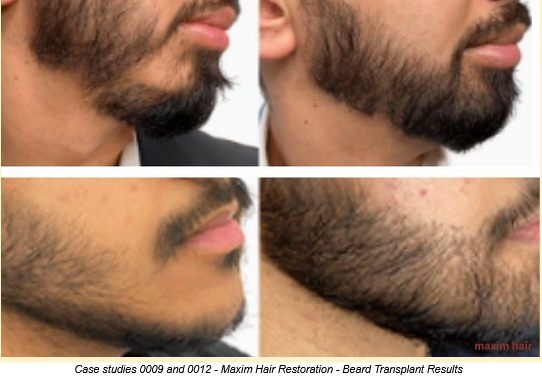
A beard transplant is regarded as a cosmetic procedure for men who have thin or patchy beard hair growth due to genetics, scarring, or autoimmune disorders such as Alopecia Barbae, which causes beard hair loss in the same way as Alopecia Areata does on the scalp.
A surgeon will extract a number of grafts from a healthy donor area (such as the back of the head or the chin), and implant the follicle grafts where there are thin or patchy areas. Over time (up to 12 months), transplanted hairs complement existing hair, giving you a fuller beard.
The most common techniques for a beard transplant are:
- Follicular Unit Extraction (FUE): Individual follicles are harvested and transplanted to the donor site with minimal scarring.
- Follicular Unit Transplant (FUT): A strip of scalp is removed from the back or side of the head and follicles transplanted. This procedure is not as common because it can cause scarring.
The hair restoration surgeon will examine each patient’s existing facial hair and recommend the procedure that will best meet the goals the client has.
Increase your self-confidence, disguise burns, scars, or acne, and improve beard fullness with Maxim Hair Restoration. Book a complimentary consultation today with one of our qualified practitioners to determine if a beard transplant is the right option for you.
Beard restoration: Before and after results
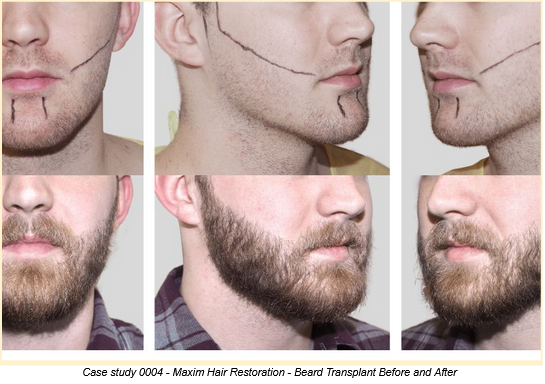
Before-and-after images of facial hair growth can be dramatic. Men with thin or patchy beards – or even areas where there is no facial hair – achieve a fuller beard after the transplant. While these images don’t capture the recovery period, the final results often outweigh the temporary discomfort of the healing period. Here’s what you can expect if you do decide to go ahead with a beard transplant.
Timeline of expected results:
- Pre-surgery: Patients meet with a surgeon to discuss their hair transplant goals and desired results.
- Days 1-10: The procedure is done under local anaesthetic, and is completed within 4-6 hours depending on the number of grafts transplanted into the beard area. During the initial recovery, crustiness, slight bleeding, inflammation, and redness are common but quickly settle down. Pain is managed with over-the-counter medications.
- Weeks 1-2: Initial healing
- Months 1-3: Changes in hair growth and structure as natural growth patterns continue in donor follicles.
- Months 6-12: New hairs grow thicker and fuller, bringing the new beard to full maturity in the recipient areas. Most patients see desired results during this period.
- After 12 months: Should results not be as expected, the patient may need a second procedure to see the desired results. The number of hair transplants stands at around 30% of total patients in 2024. Most patients get a good result with one procedure (67%). [1]
By the end of the first year, a large percentage of men enjoy a beard that looks and feels natural. While a small percentage may require a second procedure, this is less common. With the recovery process complete and the results fully visible, the next question is: How long will the results last?
How long does a beard transplant last?
As a potential beard restoration candidate, you want to know whether the financial investment you make will last, and that’s reasonable.
The short answer is: Yes, a beard transplant is permanent, provided that certain health problems are excluded, which may affect the new hair grafts.
Once the transplanted follicles settle down and survive the initial healing period, they will get their own blood supply. Once they are rooted into the recipient area, they will go through the natural growing phases that all hair go through, and can be styled and cut like normal hair. The appearance of your beard will remain stable after 12 months, and you no longer need to worry that further grafts will be needed.
Make sure you can enjoy the lasting results from your hair restoration surgery. At Maxim Hair Restoration, our beard transplantation specialists will guide you through every step of the process – helping you to achieve a good outcome for years to come.
Beard transplantation costs
The cost of a beard transplantation varies depending on the location, the number of grafts, and the surgeon’s expertise.
Average costs across the U.S for 2000 grafts are around $6,000–$15,000. While overseas procedures cost less at $2,000–$5,000, the quality of the beard transplant and the safety regulations vary from country to country. Typical transplants take between 2000 – 4000 grafts (for severe hair loss).
Travelmedi, a medical tourism company that possesses a certification of the American MTQUA (Medical Travel Quality Alliance), reports the following beard transplant costs: [2]
| Country | Average Cost in Dollars |
| America | $6,000 – $10,000 |
| Turkey | $1,250 – $4,000 |
| United Kingdom | $5,000 – $12,000 |
| Italy | $5,500 – $8,500 |
Risks and complications of beard transplants
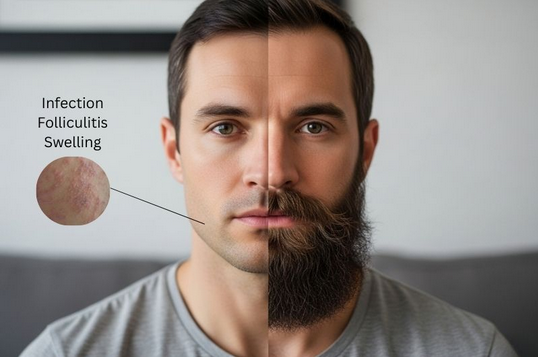
While beard transplants are safe when performed by qualified professionals, there are some risks associated with cosmetic procedures:
- Infection or scarring at the donor site or recipient site.
- Uneven growth if the grafts are not correctly placed.
- Shock loss of hair near the transplanted site (this is temporary)
- Folliculitis is an inflammation and infection of the hair follicles caused by the presence of bacteria. It causes red, itchy bumps that are made worse by shaving.
If you notice any persistent redness, swelling, or red bumps that are oozing, contact your doctor immediately to prevent complications and ensure the success of your beard transplant.
Further reading: The post-hair transplant maintenance guide: what you need to know
How to choose the right beard transplant clinic
Selecting the right hair restoration clinic is as important as the decision to invest financially in a beard transplant. When considering a provider, ask the following questions:
- Is the surgeon board-certified to perform hair transplantation?
- How many beard transplants have they performed?
- At which clinics have they performed these beard transplants?
- Can they provide before-and-after pictures of past patients’ results?
- What is included in the cost of the procedure?
Your top priority with a beard transplant should always be your safety and the quality of the results. While cost is an important factor for many patients, it should never outweigh the credentials and experience of the surgeon. Always ensure you are placing your trust in a clinic that can safely deliver results.
The success of your beard transplant depends on the expertise of your surgical team.
At Maxim Hair Restoration, our doctors specialize in facial hair procedures and producing natural-looking results. Schedule a free consultation to discuss your options.
Conclusion
A beard transplant is a cosmetic procedure that can increase your self-esteem and restore your confidence if you’ve been suffering from beard hair loss due to scarring or acne. With transplants increasing in popularity, results from FUE and FUT grafts are surprisingly good, giving many men a chance at growing a full and thick beard.
With the right post-operative care and a little time, you can get your desired results. You can achieve this by choosing the right clinician and strictly adhering to recovery protocols immediately after the procedure, as well as in the months that follow.
Ready to grow the beard you’ve always wanted? Contact Maxim Hair Restoration or submit photos for a personalized assessment.
Frequently Asked Questions
1. How many grafts do I need for specific beard areas like a moustache or sideburns?
For sideburns, you’ll need around 200-250 per side, and for a moustache, it will be up to 500 grafts. Transplants are highly personalized and depend on several factors that should be discussed with your doctor.
2. Which hair is used as donor follicles for a beard transplant?
Scalp hairs are commonly used for transplants, but in specialized cases, the hair on the chin can be used as donor follicles.
3. Will a beard transplant adequately cover scars due to facial trauma?
Beard transplants can camouflage most injury scars on the face; however, if the damage is extensive and there is a great deal of scar tissue, the results will vary.
4. What alternatives exist if I’m not ready for a full beard transplant?
Non-surgical alternatives do exist, such as scalp micropigmentation (a scalp tattoo that gives the appearance of closely shaved hair) and cellular micrografting (existing healthy follicles are harvested for regenerative cells, and these cells are injected into the beard area to stimulate natural growth)
5. What factors might prevent me from having a beard transplant?
Yes, various conditions would make a transplant difficult or impossible, such as an insufficient donor supply or ongoing infectious skin conditions. Other factors that can affect the outcome are poor previous wound healing and an uncontrolled medical condition.
References
1. International Society of Hair Restoration Surgery 2025 Report