Hair Transplant Recovery Guide: Timeline, Healing Stages & Expert Tips
How long will it hurt after the hair transplant? Why is my scalp red? Can I wash my hair as normal? Is it normal to lose hair after two months? When will I see full results? These are just some of the questions new hair transplant patients are concerned about, and with good reason.
You probably took some time to decide to do hair transplants; most people do. So, of course, it is only natural that you want to understand what you can expect in the days and months following the transplant procedure. In this guide, we cover everything you can expect for up to 12 months post-op and provide recovery tips to help you achieve optimal results.
Quick Overview
Hair transplant recovery is generally smooth, with most patients returning to normal activities within 10 days. Mild pain and swelling are the most common sources of discomfort in the first few days, but pain medication is usually only required during the first 24 hours. Full physical recovery takes around 2–3 months, although most patients feel close to normal much sooner. Deeper healing continues in the background.
Table of Contents
- What is meant by hair transplant recovery?
- Why you should take recovery in your stride
- Hair transplant recovery timeline at a glance
- Detailed breakdown of recovery process: What to expect
- Days 1-3
- Days 4-10
- Week 2-4
- Months 1-3
- Months 4-12
- Final thoughts
- Frequently Asked Questions
What is meant by hair transplant recovery?
Hair transplant recovery refers to the period from completion of the procedure until the scalp has healed, and the patient feels like themselves again. Everyone’s healing experience is different, and full recovery can take 2 – 3 months.
Haven’t decided to do the transplant yet, and just checking out the process? You’re not alone; most hair loss patients factor in recovery time, risks, and complications into their hair transplant decision.
While this information is helpful, it’s not enough on its own. A personal consultation with a qualified clinician will give you the clarity and guidance you need based on your individual situation. Their expertise is key to achieving natural-looking results.
At Maxim Hair Restoration, our clinicians have helped hundreds of patients restore their confidence through proven, personalized treatment plans. Contact our team today to find out how we can help you.
Why you should take recovery in your stride

After your hair transplant, there are two phases: the physical healing process and the longer phase of waiting for results. These are very different experiences.
Redness, swelling, and scabbing can look concerning at first, but they are all normal and usually subside within the first 7–10 days. Most patients find that physically, recovery is much easier than expected.
What many patients find more challenging is the waiting period. Seeing hair gradually grow in requires patience, especially during the shedding phase and early regrowth stage. Setting realistic expectations early helps maintain confidence throughout the process.
That waiting process is made easier by knowing that most hair transplants are highly successful. According to a report from the International Society of Hair Restoration Surgery (ISHRS), 67% of patients need only one procedure to achieve desired results, and 30.8% need two procedures.
Hair transplant recovery timeline at a glance
Below, we provide the average hair transplant recovery time, along with care tips. Always follow the advice of your clinician exactly, as the type of hair transplant procedure, severity of the hair loss, and your natural hair type will affect the phases of the recovery process.
| Phase | What you can expect | Care tips |
|---|---|---|
| Days 1-7 | Swelling (lasting 4-5 days), scabbing, mild discomfort | Sleeping with your head elevated after your transplant is recommended, as this helps reduce swelling. Your clinician may also prescribe pain medication. Take it exactly as instructed to manage post-operative discomfort. When washing your hair, mix baby shampoo with water in a bowl and gently pour it over the scalp without rubbing. Pat the area dry using a paper towel. |
| Days 7-10 | Scabs begin to soften and fall off. Some hair may be seen in the scabs, but this should not be cause for alarm. It is part of the healing process. | From day 7, wash scalp using baby shampoo and apply gentle pressure with fingertips, using a circular motion to loosen scabs. |
| Weeks 2-4 | The scalp is healing well and it feels more comfortable. Some hair shedding is normal. | Continue to use recommended care products and wash hair gently. |
| Months 1-2 | Healing continues, but you won’t see new hair just yet. | You can return to your normal hair washing routine. |
| Month 3 | The moment you’ve been waiting for – new hair begins to peek through, proving the wait was worth it. | Stick with your normal hair care and styling routine. |
| Months 4-6 | New hair continues to grow, and by month 6, it is noticeably improved. | Expect fine and patchy new hair. It may not look ‘right’ at this point, but healthy hair growth is occurring. |
| Months 7-12 | Transplanted hair follicles continue to mature, and thickening of hair continues up to 12 months. | Continue hair care routine with regular trimming and styling if required. |
Detailed breakdown of recovery process: What to expect
Below, we walk you through the hair transplant recovery timeline, with key milestones, warning signs, and simple care tips to help you know what’s normal, and when to reach out for support.
Days 1-3: Post-transplant discomfort
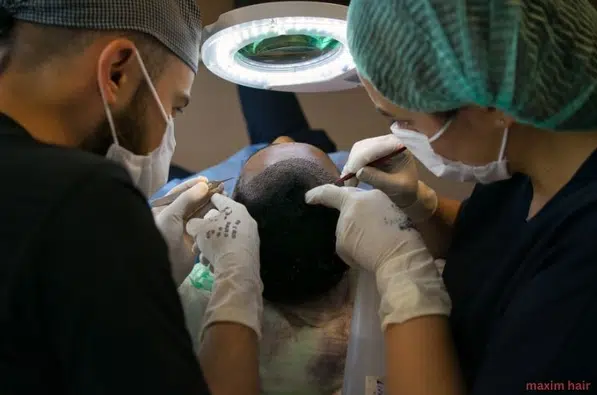
What happens:
- The scalp is red, sensitive, and swollen. There can also be facial swelling. You may also experience mild discomfort at the surgical site, but for many, this is not the case.
- With FUT (Follicular Unit Transplantation), the donor area will feel sore and tight (like sunburn) for a few days. However, the discomfort is manageable and short-lived.
- FUE (Follicular Unit Extraction) involves multiple small puncture wounds on the scalp, which can cause mild discomfort but it resolves quickly.
When to contact your clinical team:
- Continued bleeding from the donor area or the small recipient-site incisions.
- Pain that does not improve with your prescribed medication. Pain varies widely, but most patients need pain relief only for one to two days post-op.
- Spreading redness, increased warmth, or worsening tenderness on the scalp. While infection is exceptionally rare, your clinical team should assess these symptoms to determine the cause.
Like any surgery, a hair transplant comes with associated risks. In the early days post-op, the hair transplant recovery process will be greatly enhanced by following the surgeon’s aftercare instructions.
Days 4-10: Scabbing
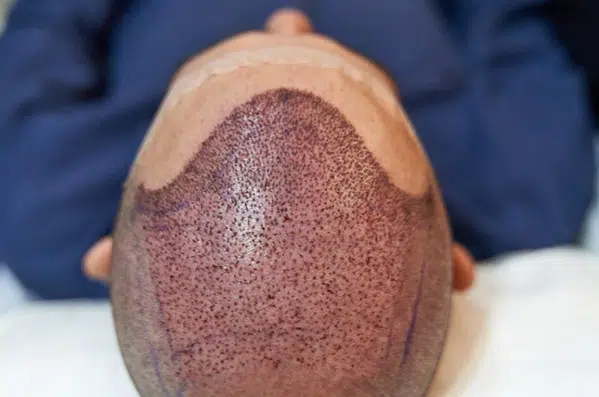
What happens:
- Redness and swelling begin to fade, leaving mild redness from increased blood flow.
- Scabs begin to loosen and flake off naturally – this is part of the healing process.
- Donor sites will heal up faster than the implanted grafts, since no tissue was reintegrated into the wound channel.
When to contact your clinical team:
- Redness accompanied by increasing heat, worsening pain, and foul odor. While rare, this may indicate infection.
- Clusters of pus-filled bumps (not just one or two isolated pimples or ingrown hairs) can indicate folliculitis. Small, individual bumps or occasional pimples without pus are often part of normal healing and usually not a cause for concern.
Around days 2–3, you may begin cleansing using the pour method. A small amount of baby shampoo can be diluted in a bowl with tepid water, then gently poured over the scalp to rinse away surface debris. Light pressure may be applied to the donor area, but direct pressure on the grafted sites should be avoided. From day 7 onward, gentle fingertip pressure in small circular motions can be used in the donor area to further loosen and remove residual debris.
Week 3-8: Shedding phase
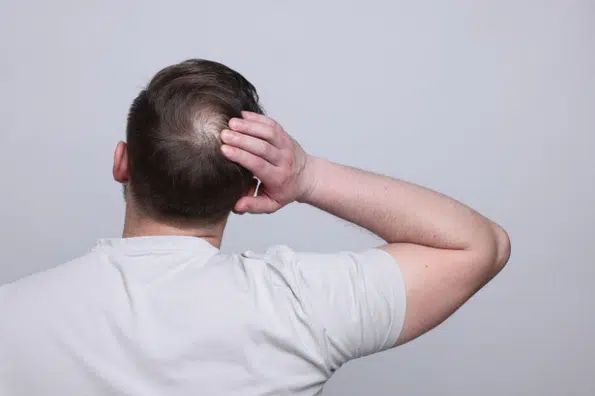
What happens:
- Transplanted hair falls out. This varies amongst patients.
- The recipient areas should look completely normal, and all scalp redness and scabbing should be gone.
- Patients feel mostly healed from the hair transplant and have resumed all normal activities.
When to contact your clinical team:
- If you notice redness or bumps that concern you in any way, contact your clinical team for assessment.
Patients can feel unsettled during this phase due to shedding. However, these changes are part of the normal healing process. Continue consistent and gentle scalp care. Avoid sun exposure by wearing a well-fitted hat (not tight, nor overly loose) for 3 months.
Connecting with a hair transplant clinical team you can trust with your implants, and post-op care is vitally important for a good result. The clinicians at Maxim Hair Restoration are highly skilled and are committed to your hair restoration dreams. Meet our clinicians, and find a trusted professional.
Months 3: First signs of regrowth

The first signs of regrowth appear in month 3 as thin and often wispy hairs emerge from the scalp. The scalp continues to stabilize with any remaining numbness or sensitivity settling during this period.
It is an exciting time for patients as they watch new hair (often referred to as ‘baby hair’) begin to emerge. Regrowth varies from patient to patient, and it may seem painfully slow at first (or uneven), but this is part of the normal hair growth.
Growth timelines vary significantly between patients, and this variation is completely normal. If you have concerns about your progress, your clinical team is best placed to evaluate it.
Months 6: Marked regrowth and thickening
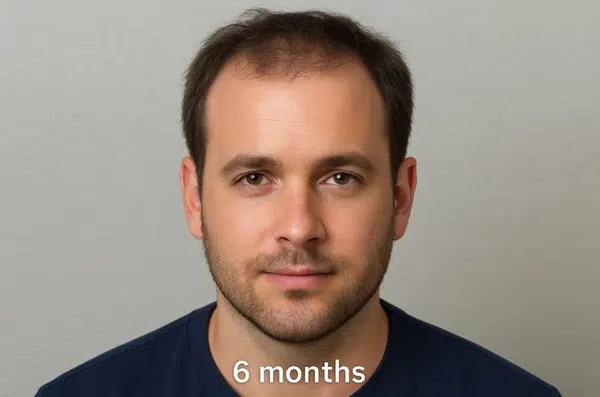
At the 6 month mark, you should see a visible change in the thickness and length of your hair. Hair growth is not consistent at this stage, so you might find some areas are denser than others. If this bothers you, try getting a haircut that corrects the unevenness. At 6 months, you will see a marked improvement, but remember this is not the final result. This can take between 12-18 months.
Month 12: Final outcome
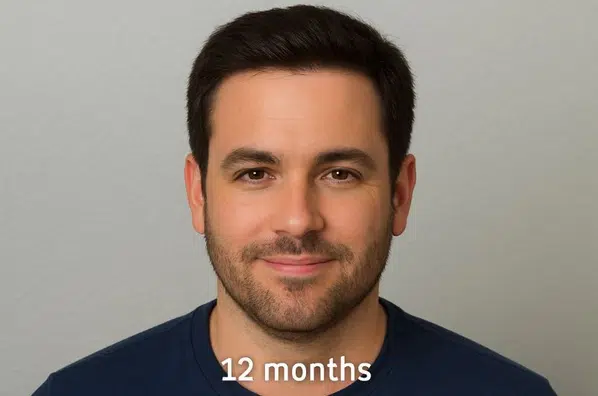
By the 12-month mark, most patients see their transplant reach near-final density, coverage, and texture. Transplanted hairs typically gain additional diameter and strength during this period, contributing to a fuller overall appearance.
For many patients, this stage represents the final outcome of their hair transplant procedure. However, some patients will continue to see hair increasing in thickness up to 18 months after the procedure.
Final thoughts
Looking and feeling attractive is a major reason for hair transplants. Not only does a full head of hair make you look and feel younger, but you get a major boost in confidence, and that’s priceless.
Perhaps you’re someone who suffers from hair loss, and you’re here because you want to understand the recovery process before you commit to hair transplantation. If so, you should speak to the experts now and get answers to all your questions. Book a free consultation with Maxim Hair Restoration – their experienced clinicians are waiting to help you.
Frequently Asked Questions
Will it hurt after the anesthesia wears off?
Mild pain, swelling, and tenderness are common after the procedure and usually last 1–3 days. Your clinician will prescribe pain medication if needed, and most patients only require it for a short period.
My scalp looks scabby and tender. Is this normal?
Scabs, crusting, and redness are expected for up to two weeks after the procedure. They usually heal on their own as part of the body’s natural healing process.
How do I know if my grafts are infected?
Infection is rare but possible. Folliculitis may appear and is treated with oral antibiotics and topical care. If you’re concerned, speak to your clinician right away.
Will I have a visible scar?
FUT procedures leave a linear scar in the donor area, while FUE creates small, dot-like scars. In most cases, skilled surgeons minimize scarring, but it may still be noticeable, especially if you plan to shave your hair very short.
Is hair shedding after a transplant normal?
Yes. Shedding (also called shock loss) is completely normal and usually happens within the first 3–6 weeks. It’s part of the hair growth cycle and a sign that the follicles are entering a new phase.
When will I start seeing hair growth after a transplant?
New hair typically starts to appear around the 3-month mark. Early growth may look thin or patchy, but thickness and density improve gradually over the following months. Growth timelines vary significantly between patients, and delayed growth does not necessarily indicate a problem. Your clinical team is best placed to evaluate your progress.