What are the best scalp exercises to stimulate hair growth?
If you’ve started noticing more hair in your brush, your shower drain, or under bright bathroom lighting, you’re not alone. Thinning hair is undoubtedly frustrating, especially when you haven’t considered medical treatment or hair transplant surgery.
Many experts would recommend some home methods since these tend to have a low risk and are easy to test. Scalp massage is perhaps the most well-known method in this field. Of course, a scalp massage to support healthier hair growth will not override genetics, albeit a structured routine can:
- Improve comfort.
- Support scalp health.
- Create better conditions for nourishing hair follicles.
In this guide, we’ll shed some light on very practical scalp exercises, the correct technique to perform these exercises, and what research can and cannot support. We’ll also touch on a realistic view of hair loss patterns, such as pattern baldness and female pattern hair loss.
Regular Scalp Massages for Hair Growth and Hair Thickness
Hair follicles are located within scalp skin and extend into deeper layers near the subcutaneous tissue. This is where small blood vessels supply oxygen and nutrients. The reasoning behind scalp stimulation is simple: a healthy scalp with stable circulation and low irritation supports the best function your follicles can achieve.
Research also suggests that there is a second mechanism at play. What researchers found is that controlled scalp movement can create mechanical signals in deeper tissue, which may influence follicle biology via dermal papilla cells [1].
If you’re not familiar with them, dermal papilla cells help regulate the hair cycle, so any signal that affects them has theoretical relevance, even though it does not guarantee the regrowth of hair follicles.
A 2016 study investigated a standardized routine that used a massage device for 4 minutes per day over 24 weeks. The authors reported increased hair thickness at week 24 and explored a plausible mechanism that involved the induction of stretching forces in the scalp. At the same time, gene expression changes were observed in dermal papilla cells after stretching in lab conditions [1].
This does not prove that every scalp massage produces the same result, but it supports the idea that consistent scalp exercises with fixed timing matter more than random rubbing.
Hair Loss, Scalp Massage, and Blood Circulation
When people ask whether scalp massage works, the most accurate answer is that it may produce modest improvements for some people. It’s mostly noticeable when it comes to hair shaft thickness instead of new hair count [1].
It’s absolutely critical to tell the difference between hair shaft thickness and new hair follicles. That’s because many forms of hair loss reflect miniaturization or cycle disruption that needs medical evaluation. If you notice progressive hair thinning, recession at the temples, and diffuse crown loss, the cause can be any of the following:
- Androgenetic alopecia.
- Telogen effluvium.
- Traction alopecia.
- Inflammatory reaction in the scalp.
- A mixed condition.
With all of that said, the goal of scalp massage is to support the environment around hair follicles, improve adherence to scalp care practices, and support hair growth when the follicles still have growth capacity.
On the other hand, we have microneedling, which has stronger clinical support than massage alone for androgenetic alopecia. According to a randomized pilot study, microneedling that’s combined with topical minoxidil outperformed minoxidil alone.
This supports the idea that controlled micro-injury can actually be a trigger for growth signals and support hair restoration [2]. Obviously, this does not mean that a dermaroller replaces conventional treatment, but it does place microneedling in a different evidence tier than casual massage.
Let’s go over the most common scalp exercises that help stimulate hair growth:
| Method | How to do it | Main Target | Evidence Strength | Safety Note |
| Scalp mobility drill | Palms move scalp skin forward/back without rubbing hair. | Tissue mobility and comfort. | Supportive. | Avoid too much pressure and hair-pulling. |
| Fingertip circles | Small circular motions across the entire scalp | Blood flow and scalp stimulation. | Supportive. | Use fingertips but never your nails. |
| Short inversion with scalp massage | Head below the heart briefly, then massage | Temporary circulation shift. | Limited. | Avoid doing this if you have a history of blood pressure issues. |
| Upside-down wash | Flip hair forward and massage shampoo into scalp. | Cleansing and stimulation. | Supportive. | Avoid harsh chemical treatments. |
| Dermaroller (microneedling) | Protocol-based microneedling with hygiene. | Growth signals and absorption. | Moderate/strong. | Practice hygiene to avoid infections. |
| Scalp massager | Silicone tool in circles. Do this with consistent pressure. | Repeatable routine. | Supportive. | Clean tools and avoid broken skin. |
The Benefits of Massaging Your Scalp for Hair Health
We now understand that scalp massage has value even if the final result isn’t dramatic hair regrowth.
Here are the benefits of massaging your scalp:
- Supports a healthy scalp as it reduces surface tension and discomfort, which improves adherence to long-term routines
- Improves blood flow locally, which supports follicle metabolism and reduces the “tight and tender scalp” sensation.
- Supports stress relief since emotional stress and high cortisol levels are linked to telogen effluvium. Think of a scalp massage as an anxiolytic activity.
- Reduces breakage and improves hair care practices, so expect to see healthier hair and a denser look.
- A routine that encourages gentle massage across the entire scalp is very useful to detect scalp problems early on in the process. These signs include inflammation, scaling, and tenderness.
The most common scalp exercises that help stimulate hair growth
1. Scalp mobility drill
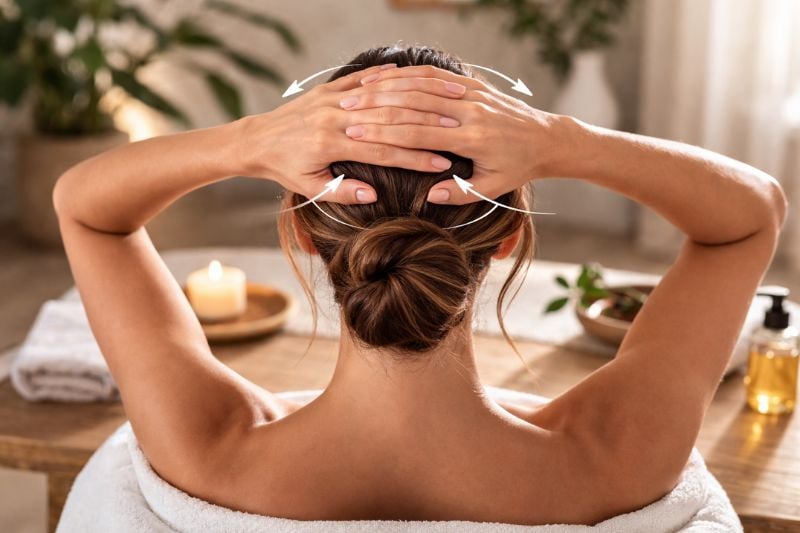
Despite the name, this is a mobility drill and not a spa routine. The goal is scalp movement over the skull without the friction on hair shafts. This matters because traction and friction can worsen shedding if you use your nails or pull fragile hairs.
How to do it:
1. Place both hands on top of your head.
2. Interlock your fingers (thumbs free).
3. Without sliding your fingers across the hair, use your palms to move the scalp forward and backward.
4. Focus on shifting the skin of the scalp.
5. Apply moderate pressure that feels firm but comfortable.
6. Perform for 20 seconds, rest for 10 seconds, and repeat 8-10 cycles.
The goal of this method is to target subcutaneous tissue mobility and support the kind of mechanical signaling that we mentioned above in the standardized scalp massage results study [1]. If you experience soreness, reduce pressure. Remember, too much pressure adds irritation and can increase shedding.
2. Fingertip circles across the entire scalp
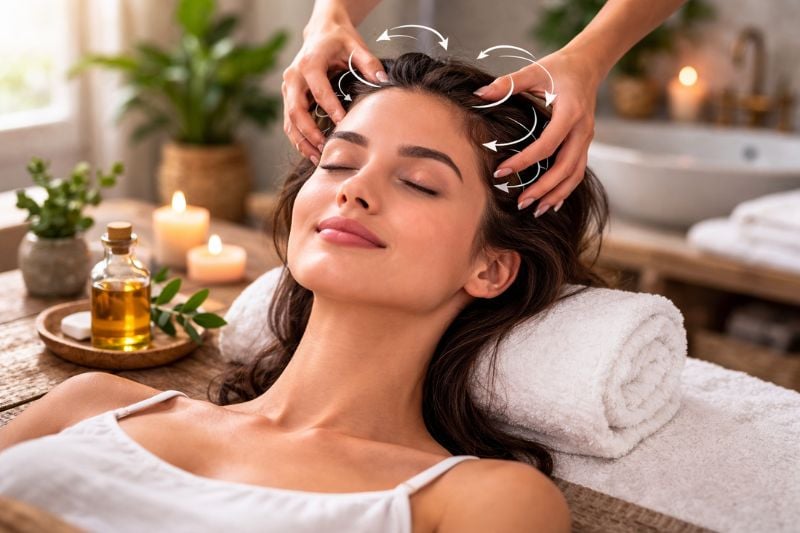
This is the classic scalp massage method. It works best when you treat it like a structured routine instead of a quick scratch. Use fingertips, keep nails off the scalp, and work in small zones so you cover the entire scalp evenly.
How to do it:
1. Start at the hairline and temples, then move to the crown and occipital area.
2. Use circular motions in 2–3 cm zones for 20–30 seconds per zone.
3. Alternate clockwise and counterclockwise movements.
4. Keep pressure consistent, from gentle pressure to medium pressure, then stop if tenderness rises.
Research tells us that this technique stimulates hair growth indirectly through the improvement of blood circulation and scalp comfort. It also makes daily scalp massage easier to maintain. This is because compliance improves when the steps are simple.
3. Short inversion plus circles
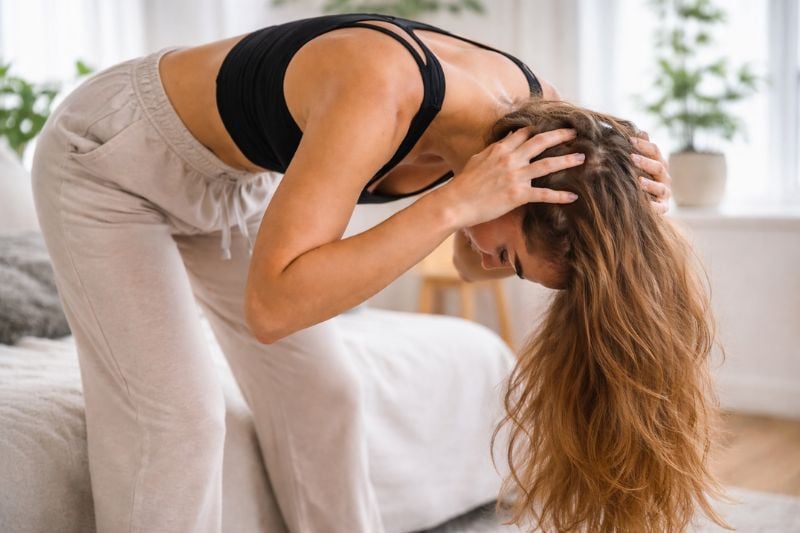
The inversion method places the head below the heart briefly. After that, it adds a short scalp massage. The theory is that when circulation shifts toward the scalp, the massage will support follicle perfusion. When it comes to research, evidence remains limited.
How to do it:
1. Sit and bend forward so your head lowers below your heart for 30-60 seconds.
2. Perform a brief scalp massage in small circular motions for another 30-60 seconds.
3. Return upright slowly.
If you have a medical history of dizziness, uncontrolled blood pressure, a high risk of glaucoma, or any neck problems, you should avoid this method. In case you don’t have a history of the previous conditions and lightheadedness occurs, stop immediately.
4. Upside-down washing routine
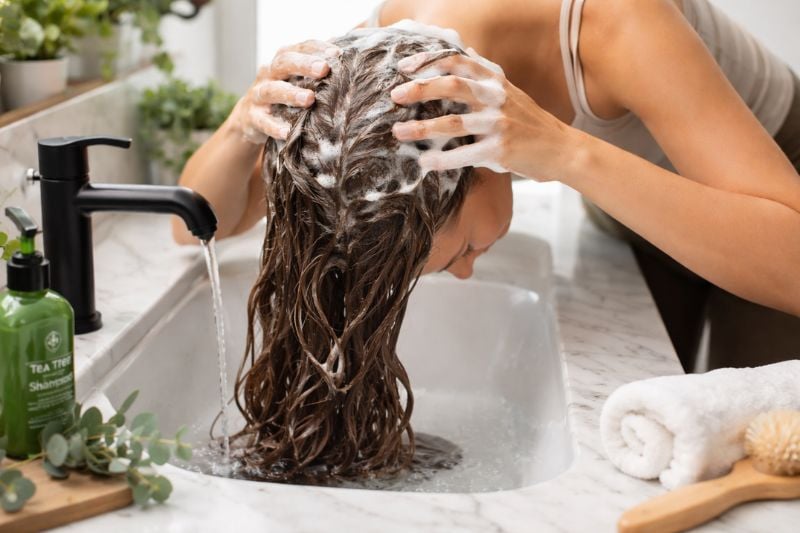
Upside-down washing is another very interesting way that supports better cleansing in areas that see less direct attention.
How to do it:
1. Flip your hair forward, wet the scalp thoroughly, and massage shampoo into the scalp with fingertips for 60-90 seconds.
2. Rinse well.
3. Apply conditioner mainly to the hair lengths to reduce breakage.
4. If hair feels dry or frizzy, a leave-in conditioner can protect the shaft and improve the look of thicker hair.
Use this technique if your scalp and hair are sensitive to some styling practices and chemical treatments.
5. Dermaroller microneedling
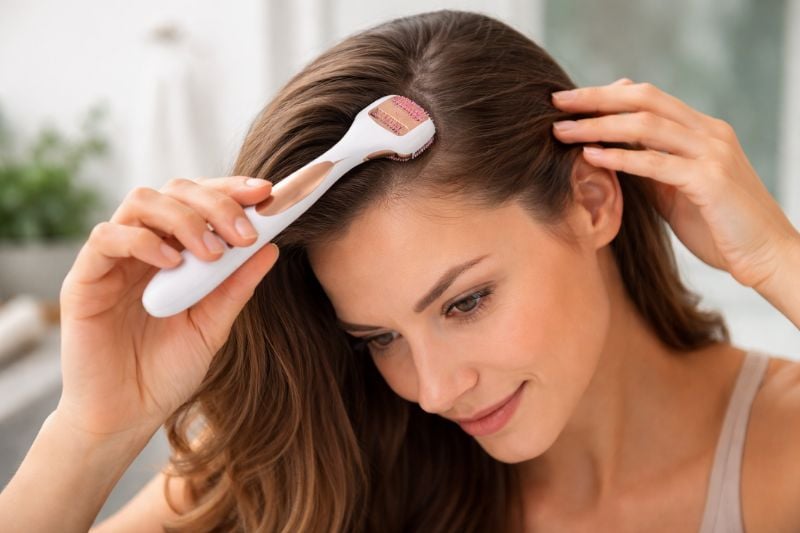
A dermaroller works in a seemingly counterintuitive manner since it causes micro-injuries. In hair restoration settings, microneedling supports hair follicles through wound-healing signals and may enhance absorption of topical agents. In a randomized pilot trial, microneedling when combined with minoxidil showed better results than minoxidil alone for androgenetic alopecia [2]. This does not mean every patient should self-treat at home. Remember, hygiene and protocol are indispensable.
How to do it:
1. Use a medical-grade device.
2. Disinfect before and after use.
3. Avoid excessive pressure, repeated aggressive passes, and the use of the device on broken skin.
If you have scalp folliculitis, dermatitis, and psoriasis, avoid microneedling until the flareups subsides. Despite that, infection, irritation, and scarring are still possible with poor technique.
If you want a more predictable outcome, you can always reach out to us to get a professional session of microneedling by an expert in the field.
Can a scalp massager help with hair growth?
A scalp massager can improve consistency, which is the main advantage. The standardized research routine used a massage device for 4 minutes per day and reported thicker hair at 24 weeks [1].
Of course, this does not prove that every scalp massager produces the same effect, but it supports the idea that consistency matters. Many people apply uneven pressure with their hands, so a tool can help maintain a stable routine and reduce fatigue.
How to use a scalp massager well:
1. Choose a silicone scalp massager with flexible tips.
2. Use it on a damp scalp in the shower or on a dry scalp with a small amount of oil.
3. Keep the tool clean since buildup can irritate skin.
4. Use moderate pressure, avoid too much pressure, and do not use it on broken skin.
A second scalp massager can be useful if one stays in the shower and one stays in a gym bag, because convenience improves adherence.
Essential oils for increased hair thickness – Do They Work?
Essential oils appear in all types of hair loss discussions. We can find a few studies here and there. However, the quality of the evidence is not promising. For example, a randomized trial concluded that rosemary oil performed similarly to 2% minoxidil in androgenetic alopecia by 6 months. What’s interesting is that the rosemary group reported less itching compared to minoxidil [3].
Another animal study focused on peppermint oil in a preclinical study. The authors objectified hair growth effects in that model [4]. Lavender oil also has animal data that suggests hair growth-promoting effects in mice [5].
Aromatherapy in the field of alopecia areata, which is a severe form of hair loss, has been studied as well. A classic randomized trial found some benefits to the use of aromatherapy in the moderation of immune cells that trigger alopecia areata [6].
If you want to follow a safe protocol, here are a few tips:
- Always dilute essential oils in a carrier.
- Natural oils such as argan oil can work as a carrier, but any well-tolerated carrier oil can fit.
- Do a patch test first and stop if burning, rash, or flaking occurs.
If you currently have ongoing scalp inflammation, stop paying attention to the oils and seek professional help to get an accurate diagnosis with an appropriate treatment plan.
Hair Growth Tips, Scheduling, Pressure, and Common Mistakes
Once again, if you want results, focus on consistency and not intensity. Plan a daily scalp massage for hair growth for about 4 minutes per day to match the study protocol that reported healthier hair at 24 weeks [1]. Additionally, integrate 2-4 sessions per week that focus on scalp mobility (plus in-shower cleansing massage on wash days). If you are using oils, keep using them 2-4 days per week.
Make sure to apply moderate pressure that moves the scalp skin but does not hurt. Too much pressure increases irritation and can increase shedding. If you are still experiencing tenderness after a few hours, that might mean the pressure was excessive.
A common pitfall that can worsen your condition is scrubbing with nails. We recommend that you only focus on one spot instead of the whole scalp. Also, be realistic about the results and don’t expect immediate hair regrowth within a few weeks. Finally, we don’t recommend the use of multiple hair products at once.
Let’s summarize this entire protocol in a table:
| Goal | Method | Frequency | Technique | Don’t Do |
| Comfort and routine adherence | Fingertip circles. | Daily for 4 minutes. | Even pressure across zones. | Nails and aggressive rubbing. |
| Tissue mobility | Scalp mobility drill. | 3-5 days/week. | Move scalp skin. | Hair pulling and soreness. |
| Tool consistency | Scalp massager. | Daily or on wash days. | Small circles with medium pressure. | Dirty tools and broken skin use. |
| Oil adjunct | Diluted oils. | 2-4 days/week. | Patch test and conservative dilution. | Undiluted essential oils. |
| Higher-evidence adjunct | Dermaroller protocol. | Only with guidance. | Clean technique. | Poor sanitation and frequent heavy sessions. |
Conclusion
If your hair loss still progresses despite following all the tips listed above, it’s time to switch the approach. This is important because pattern baldness and female pattern hair loss tend to progress without treatment. A scalp massage can help, but it cannot stop miniaturization.
If shedding becomes sudden, diffuse, or paired with scalp pain, inflammation, or scaling, it’s time to see a professional. Luckily, we provide a free consultation for first-time patients to help them better understand their condition.
References
[1] Koyama, T., Kobayashi, K., Hama, T., Murakami, K., & Ogawa, R. (2016). Standardized scalp massage. Eplasty, 16, e8.https://pmc.ncbi.nlm.nih.gov/articles/PMC4740347/
[2] Dhurat, R., Sukesh, M. S., Avhad, G., Dandale, A., Pal, A., & Pund, P. (2013). A randomized evaluator blinded study of effect of microneedling in androgenetic alopecia: A pilot study. Journal of Cutaneous and Aesthetic Surgery, 6(1), 2–6.https://pmc.ncbi.nlm.nih.gov/articles/PMC3746236/
[3] Panahi, Y., Taghizadeh, M., Marzony, E. T., & Sahebkar, A. (2015). Rosemary oil vs minoxidil 2% for the treatment of androgenetic alopecia: A randomized comparative trial. Skinmed, 13(1), 15–21.https://pubmed.ncbi.nlm.nih.gov/25842469/
[4] Oh, J. Y., Park, M. A., Kim, Y. C., & Lee, J. S. (2014). Peppermint oil promotes hair growth without toxic signs. Toxicological Research, 30(4), 297–304.https://pmc.ncbi.nlm.nih.gov/articles/PMC4289931/
[5] Lee, B. H., Lee, J. S., & Kim, Y. C. (2016). Hair growth-promoting effects of lavender oil in C57BL/6 mice. Toxicological Research, 32(2), 103–108.https://pmc.ncbi.nlm.nih.gov/articles/PMC4843973
[6] Hay, I. C., Jamieson, M., & Ormerod, A. D. (1998). Randomized trial of aromatherapy: Successful treatment for alopecia areata. Archives of Dermatology, 134(11), 1349–1352.https://jamanetwork.com/journals/jamadermatology/fullarticle/189618
[7] English, R. S., Jr., & Barazesh, J. M. (2019). Self-assessments of standardized scalp massages for androgenic alopecia: Survey results. Dermatology and Therapy, 9, 167–178.https://link.springer.com/article/10.1007/s13555-019-0281-6