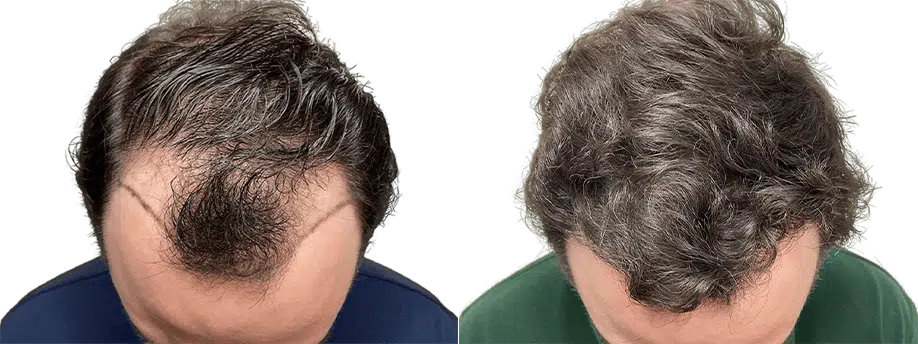
What Does A Hair Transplant Scar Look Like?
For many people considering a hair transplant, the biggest worry isn’t the procedure itself; it’s the fear of ending up with a visible hair transplant scar.
The idea that others might notice signs of surgery can be enough to delay or completely avoid treatment. Fortunately, modern hair transplant techniques have evolved dramatically, making scarring far smaller and far less noticeable than in the past.
This guide explains what hair transplant scars actually look like today, how visible they really are, and what options exist to prevent or correct them.
Key Takeaway
- With modern techniques, a hair transplant scar is typically minimal and difficult to detect.
How FUE and FUT Hair Transplant Scars Compare
Both FUE and FUT hair transplant procedures can produce scarring, but the type, size, and visibility of scars differ significantly depending on the technique used.
FUE Hair Transplant Scarring
FUE (Follicular Unit Extraction) involves harvesting individual hair follicles from the donor area and transplanting them into thinning or bald regions.
Each extracted follicle leaves behind a very small circular scar, typically appearing as a tiny white dot once healed. These micro-scars are extremely difficult to detect and are often invisible to the naked eye, even with short or close-cropped hairstyles. For this reason, FUE is a popular choice for patients who prefer to wear their hair short.
Because grafts are removed one at a time, FUE is a more time-intensive process and generally yields fewer grafts per session than FUT. However, it avoids the linear scar associated with strip harvesting and allows for greater flexibility in hairstyle choices.
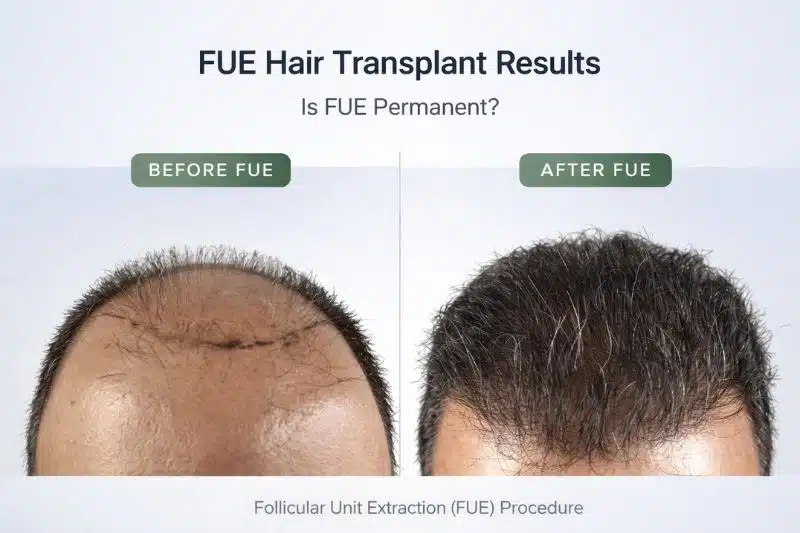
FUE Hair Transplant Scarring
FUT (Follicular Unit Transplantation) involves removing a thin strip of scalp from the donor area, most commonly from the back of the head. This results in a single horizontal linear scar.
The length of the scar depends on the number of grafts required. Patients who undergo multiple FUT sessions may experience slight lengthening of the original scar. When performed by an experienced surgeon, the scar is typically very thin and strategically placed so it can be easily concealed by surrounding hair.
FUT remains a good option for patients who do not wear their hair short and who require a larger number of grafts in a single session.
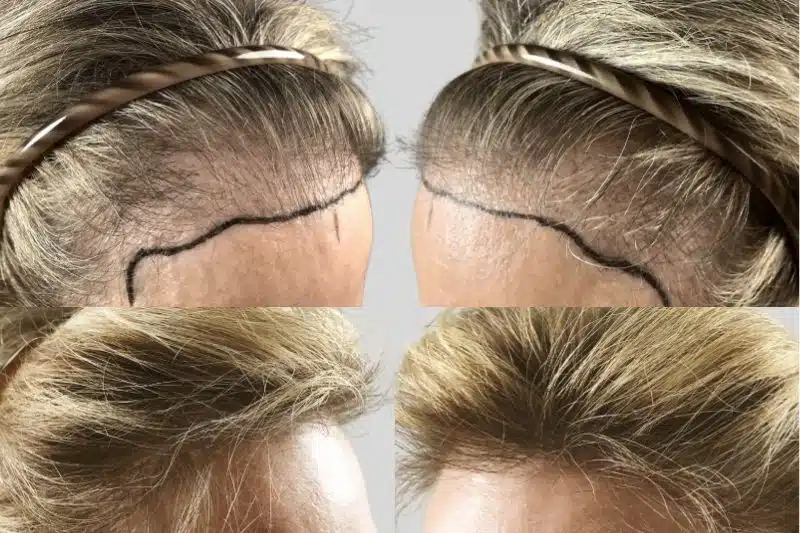
Healing and Scar Appearance
Every patient heals differently, which can affect how a scar ultimately looks. Following post-operative instructions closely helps minimize scar visibility. When properly performed and cared for, both FUE and FUT scars are positioned in inconspicuous areas and are rarely noticeable.
What is a Hair Transplant Scar Revision?
Hair transplant scar revision refers to a group of procedures designed to improve the appearance of visible or poorly healed hair transplant scars.
Some patients have noticeable scars due to older transplant techniques, suboptimal surgical methods, or individual healing characteristics. Scar revision aims to make these scars flatter, narrower, and easier to conceal.
Treatment options may include surgical excision of the scar, changing the scar’s orientation so it can be better covered by surrounding hair, or placing hair grafts into the scar using the FUE method. Additional therapies such as cortisone injections (for raised scars), dermal fillers (for depressed scars), and dermabrasion (for rough scar tissue) may also be used.
Patients with visible scarring can also benefit from scalp micropigmentation (SMP), which deposits pigment into the scarred area to match surrounding hair follicles and help camouflage the scar.
Conclusion
Concerns about a hair transplant scar are completely understandable, but modern hair restoration has made visible scarring far less common than many people expect. With advanced techniques, careful planning, and proper aftercare, most patients achieve natural-looking results with scars that are minimal and difficult to detect.
For patients who already have visible scarring, effective solutions are available. Treatments such as scar revision, FUE grafting into scars, laser therapy, and scalp micropigmentation can significantly improve the appearance of existing scars and restore confidence.
These options are especially beneficial for individuals who prefer short hairstyles or want to further minimize any signs of previous hair restoration while also addressing thinning or hair loss.
If you’re concerned about a hair transplant scar or want to explore your options, a personalized consultation with an experienced hair restoration specialist at Maxim can help determine the best approach for your goals.
Frequently Asked Questions
Do hair transplant scars go away?
Hair transplant scars do not completely go away because any surgical procedure creates some degree of permanent scarring. However, modern techniques such as FUE and FUT are designed to make scars extremely small and discreet. Over time, most hair transplant scars fade, flatten, and become significantly less noticeable, especially when proper post-operative care is followed.
Which hair transplant leaves no scar?
No hair transplant method is truly scar-free. Both FUE (Follicular Unit Extraction) and FUT (Follicular Unit Transplantation) create scars. However, FUE leaves tiny dot-like scars that are typically less than 1 millimeter in size and often virtually undetectable once healed. FUT leaves a thin linear scar that is usually hidden beneath surrounding hair.
Are FUE hair transplant scars permanent?
Yes, FUE scars are technically permanent, but they are extremely small and usually appear as tiny white dots in the donor area. In most cases, they become very difficult to see after healing, especially when the hair is kept at a medium length or longer.
What happens 20 years after a hair transplant?
Twenty years after hair transplant surgery, the transplanted hair is typically permanent because it is resistant to the hormone responsible for pattern baldness. The scar from the procedure remains, but in most cases it continues to fade and soften over time. Long-term appearance depends on factors such as surgical technique, surgeon skill, and ongoing hair loss in untreated areas.
Can a hair transplant scar be fixed?
Yes, visible hair transplant scars can often be improved. Treatment options include scar revision surgery, FUE grafting into the scar, laser therapy, corticosteroid injections for raised scars, and scalp micropigmentation (SMP) to camouflage the area. The best option depends on the type of scar and individual healing characteristics.
Does hair growth occur normally in scarred skin after hair transplantation?
Hair growth can occur in scarred skin in many cases, but results depend on scar thickness, blood supply, and overall skin quality. During hair transplantation, a skilled surgeon can place individual hair follicles into scarred areas to improve coverage and blend transplanted hair with existing hair. In some cases, laser treatment or scar repair techniques may be used first to improve skin quality and increase the chances of successful hair growth.
References: